











According to education nonprofit ED Choice, over 55% of teachers in America believe that they are concerned about students using generative AI on English assignments. Society is currently seeing AI form their own personalities and ways of thinking– like GROK and ChatGPT. West Salem High School English teacher Erik Adams said “that Generative AI is in a field where it’s pulling sources from– and creating this based on what humans put into the system.”
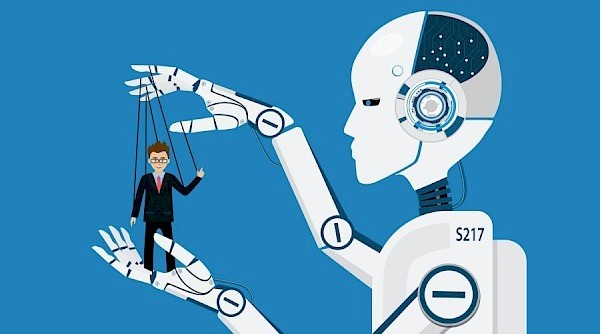
But, are these AI systems stealing the creative, logistical, and problem-solving minds of the new generation? How should educators go about keeping the minds of students from becoming ‘AI dependent’? As is already known, the student to computer ratio is currently a “double-edged sword”; West Salem High School English Teacher Cody Rohl states that “the vast amount of technology in the world is going to continue, and it’s only going to grow.”
Several teachers in the English department, specifically, believe that they are the most impacted by AI abuse; students could just generate an essay and turn it in. “And that’s not necessarily just an assumption based on nothing. I’ve had students actually use ChatGPT,” stated Rohl.
But now, problems in the classroom are way more than just a quickly generated essay turned in. Currently, teachers are trading class time for monitoring students. Adams states that AI has “really changed what teachers use class time for,” and how it’s gotten to a point where some teachers don’t trust anything from anyone unless it was done right in front of them. To ensure that all students are completing their work without the use of AI, education has “shifted its way of doing things in class. Especially, going back to a lot of handwritten work, or if it’s not handwritten, make sure it’s on Google Docs, so teachers can check that revision history, and watch them type all their work,” says West Salem High School English teacher, Heidi Propson.
In addition, teachers are now attempting to have homework switch to classwork to prevent AI doing the student’s work. But this leads to “taking more time to get through things because teachers need to add the work in class,” states Adams. Ultimately, teachers “feel like it’s an extra step on their end. Especially, trying to make sure students are doing what they say they’re doing, because why should teachers waste their time grading an AI device and not students’ personal thoughts?”
Furthermore, Rohl states that “the teacher-student dynamic has been wedged right in between with AI, and there’s things that students need to avoid, or students need to navigate, to make sure they’re not doing the wrong things with AI, and teachers need to do exactly the same thing.” But if students “put in enough time and effort to make the AI generated writing seem like their own writing, they should just write their own essay.”
Teachers are additionally facing another issue: understanding and hypocrisy. Now more than ever, students are facing stress levels adequate or above the levels of adolescent psychiatric patients in the 1950s, according to the American Psychological Association. West Salem High School English teacher Kimberly Volden states that she understands students using AI in certain cases because, “They panicked. They’ve realized they haven’t done the work they needed to do up to that point. They suddenly reach a due date, and they panic because they know they’re in trouble.”
Additionally, teachers, like Rohl, state that teachers who use AI in their classroom are “hypocritical because, as a teacher, we are telling students, do not use AI to generate writing. But then, teachers are turning around and using that same AI platform to give feedback. That’s not necessarily fair; if students are giving the original work, it should be original feedback coming back to them.” Moreover, teachers have tested out AI detectors and AI grading websites, and they were found to be faulty. AI detectors are solely derived from Oxford commas, em dashes, and semicolons– making the detection completely unfair towards writers with advanced writing. In comparison, Rohl “tested out Brisk Education (an AI-powered Chrome extension for educators) and found that it can give feedback on an essay. But, felt the feedback wasn’t necessarily all that great.” He states that “as a teacher, when teachers design the success criteria, they have an idea for what they’re looking for. And if a student isn’t meeting the criteria, they know how to articulate it, especially because they know that student on a personal level.”
However, Volden states, “it doesn’t have to be that way. Teachers can arrange their classroom so that they’re assessing students.” She states, “teachers can build stronger relationships with students without having to change the curriculum completely, because if teachers do handwritten and verbal assessments, that’s going to help build closer relationships. So, maybe a shift away from technology would grow relationships better. It’s going to be hard, and students are going to resist it, but students need to realize that the reason teachers are doing this is that teachers want students to be critical thinkers. They want students to be able to look at something, think about it, and be able to process it in a way that makes sense to them.”
On the other hand, students are facing lifelong issues with these AI systems. As stated by George Orwell, an English writer, “If people cannot write well, they cannot think well– and if they cannot think well, others will do their thinking for them.” This is exactly what is happening to this and the upcoming generations.
Drawing from George Orwell, Rohl states, “students have an over dependence, and we live in a world, in a sense, where if someone is willing to step up and say ‘I’ll do this for you’, people are very likely to say, ‘okay, thank you’. But what that really does is tie our hands behind our backs. So, we’re less capable of doing the things that we would normally be able to do.”
Consequently, students, “rather than sitting idle for a few minutes to think about how to start an essay, brainstorming ideas, or finding different resources, will just automatically just push the button and then have ChatGPT do it for them.” This solidifies this idea “that things need to be easy, and if something is difficult, it means that they are not good at it, which means they need something to help them.” Adams states, “Students really need to learn how to push through and struggle through those situations.”
This is such a pivotal issue because “in order to become a great writer, students must become a great reader. In order to become anywhere near great at something, students have to learn how to do it first. Students have to learn how to take it in and understand it in their own way. And, when students just automatically jump to ChatGPT or generative AI to make it for us, there’s this problem-solving seal element. We’re losing that. We’re losing the element of how students can do this on their own,” stated Propson.
Further, students are now experiencing their education descending into ChatGPT’s algorithm. “There was a study of people writing an essay without AI, with AI, and then some use of AI. Ultimately, the people who used AI longer, when they no longer had it, were less competent at writing later on,” said Propson. This conveys that people who are more ‘AI driven’ lack the creativity to formulate essays. Currently, society is seeing “a lot of people right now hitting a brick wall as soon as they try to sit down to write anything,” states Propson.
The justification for these momentous issues is, “a lot of students look at AI as an easy out. So rather than having to put the work in manually, people can just use AI. And even for simple tasks, people rely on using AI, rather than having to think anything through,” states Volden.
But, without any regulations on AI, “it’s going to lead to very stressful moments for students. I think they’re going to feel really defeated. It’s going to potentially cause a lot of people to potentially like to give up before they’ve even really started because they’re so overwhelmed,” says Adams.
Likewise, teachers are seeing AI essentially stealing the minds of students and replacing it with its wired hardware. Propson states, “kids are adopting ‘AI language’, where they’re writing more robotic now than ever before and the AI is getting closer to humans.” Teachers have even noticed changes in “the transition words that people use– originating from ChatGPT. But, kids have started using it even if it’s not in their regular conversational patterns,” states Propson.
Similarly, Adams states, “students are skipping the steps of figuring out what to say. So, they’re not like practicing using their own ideas because they’re taking the language from those sites.”
With new writers, “their books are not great because people can tell they’re written by AI or that the authors writing them grew up using AI, or recently have been using AI, so they’ve adopted a lot of the same mannerisms that people don’t normally see in actual human speech,” says Propson.
Rohl states that he “fears that AI is becoming a way that students are simply being spoken for. And the question is, is it really a person that’s communicating with me– or is it a computer?”
Ultimately, as stated by Rohl, “The real world is a very open, vast, wide place. And, if people have a strong set of morals and a strong sense of how to problem solve for themselves, they will be more successful.” Society needs to take hold of what it has: its voice. Rohl states, “People should take their own voice more seriously than they do, and they should be way more reluctant to use ChatGPT to represent themselves. But my biggest concern is losing your sense of self, and ChatGPT and other generative AIs are taking that away from you. One of the things we talk about specifically in the United States is our ability for free speech, but how free is our speech when it’s taken by a machine?”